

Learn on All Devices


Choose Your Java Route
-
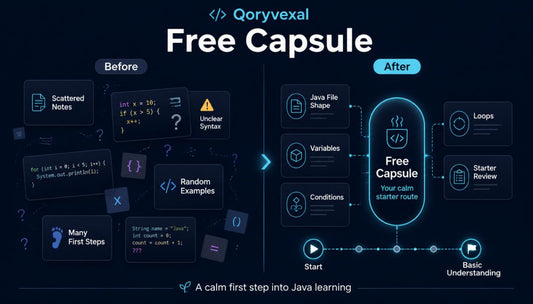
Free Capsule
Regular price €0,00 EURRegular price -
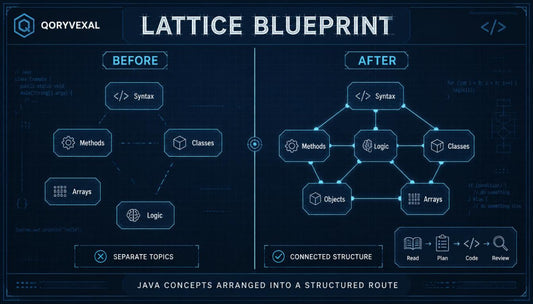
Lattice Blueprint
Regular price €70,00 EURRegular price -
Echo Session
Regular price €117,00 EURRegular price -
Neon Library
Regular price €172,00 EURRegular price




Turning Code Into a Language You Can Read
Why the Lessons Feel Different
-

Clear Structure
Each module follows a thoughtful order, helping learners move through Java topics with less confusion.
-

Practical Tasks
Each exercise connects directly to the lesson topic, helping learners apply Java ideas with purpose.
-

Code Reading
Each section includes examples that help learners observe syntax, flow, and structure before writing.
-

Steady Review
Each course includes review points that help learners revisit key Java concepts during study.


Built From a Simple Idea


30-days refund guarantee

The People Behind the Lessons
-

Dorian Lokh
Java Logic Instructor
Dorian shapes clear Java logic sections for learners who prefer order. He focuses on conditions, loops, and readable code flow. His work keeps each topic practical, calm, and structured. -

Dave Naval
Java Syntax Coach
Dave works with Java syntax, naming, and clean code examples. He prepares small exercises that show how each rule appears. His style is direct, measured, and focused on clarity. -

Charlie Goven
Java Methods Tutor
Charlie explains methods, parameters, and return values through compact tasks. He helps organize repeated code into smaller readable sections. His materials keep practice steady, clear, and useful.


Look Inside the Java Path
Notes From the Learning Journey
-

Romeo Park
Romeo came to Qoryvexal after trying to study Java through scattered notes and short examples that did not connect well. He wanted a calmer way to understand syntax, loops, and methods without jumping between unrelated topics. The structured modules helped him follow one idea at a time and connect each section with practical coding tasks.
“Qoryvexal gave me a clearer route for reading Java examples before trying to write my own code.” -

Jaydon Bartlett
Jaydon already knew some basic Java terms, but larger exercises felt difficult when conditions, arrays, and methods appeared together. He needed materials that explained how code moves from one line to the next. The code-reading prompts and review sections helped him trace values, compare examples, and study task structure with more care.
“The most useful part for me was seeing how each Java concept connects inside a full exercise.”


Begin With Starter Materials
As Seen On


